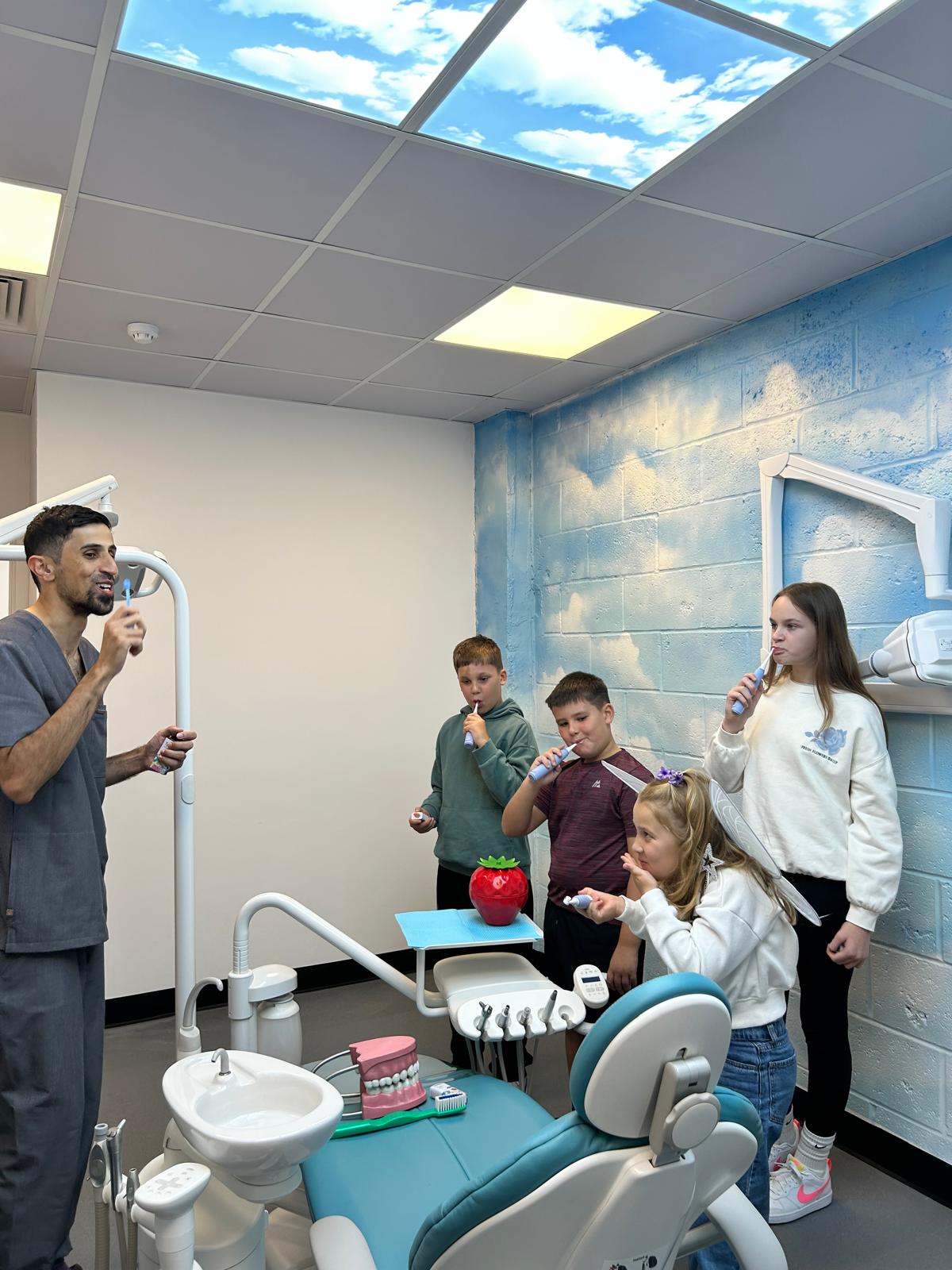
At First Smiles Children’s Dentist, we believe that learning to look after your teeth should be fun, positive and empowering. Good oral hygiene habits start in childhood, and knowing how to brush properly is one of the most important steps towards preventing tooth decay and keeping little smiles healthy.
Our Toothbrushing Academy is designed to help children and parents develop the knowledge, skills and confidence needed to care for growing teeth.
Through child-friendly demonstrations, practical advice and personalised guidance from our specialist paediatric dental team, we aim to make toothbrushing something children understand, enjoy and feel proud of.
What Is the First Smiles Toothbrushing Academy?
Our Toothbrushing Academy focuses on teaching children how to care for their teeth in a way that is engaging, easy to understand and appropriate for their age.
Brushing twice a day might sound simple, but many children struggle to reach every tooth surface, use the correct brushing technique or understand why brushing is important.
Our aim is to turn toothbrushing from a daily chore into a positive habit that children can carry into adulthood.
We also recognise that parents play a vital role in children's oral health. That's why our approach includes practical advice for families, helping parents support effective brushing at home.
What Will Children Learn?
1. How to Brush Their Teeth Properly
Brushing isn't just about moving a toothbrush around the mouth!
Children need to learn how to clean every tooth surface, including the back teeth and the areas close to the gums.
We help children understand:
- How to hold and move their toothbrush effectively.
- Why it's important to clean the front, back and chewing surfaces of their teeth.
- How to reach those tricky back molars.
- Why gentle, thorough brushing is better than brushing too hard.
- How to recognise areas they might be missing.
Our guidance is tailored to your child's age, ability and stage of dental development.
2. Why We Brush for Two Minutes
Two minutes can feel like a very long time for a young child!
We explain why brushing for approximately two minutes helps ensure there is enough time to clean all the teeth thoroughly.
Parents can make brushing more enjoyable by using a favourite song, a two-minute timer or a reward chart.
The aim is to help children develop a consistent routine rather than simply rushing through brushing.
3. Choosing the Right Toothbrush and Toothpaste
Not all toothbrushes and toothpastes are suitable for every age.
We help families understand which products are appropriate for their child, including toothbrush size, bristle softness and fluoride toothpaste strength.
Our general toothpaste guidance:
- Under 3 years: A smear of toothpaste containing at least 1,000 ppm fluoride.
- Ages 3–6: A pea-sized amount of toothpaste containing more than 1,000 ppm fluoride.
- Age 7 and above: Toothpaste containing 1,350–1,500 ppm fluoride.
Children at increased risk of tooth decay may need different fluoride recommendations following an individual dental assessment.
4. The Importance of Fluoride
Fluoride plays an important role in protecting children's teeth.
It helps strengthen enamel, supports the repair of early mineral loss and makes teeth more resistant to acid attacks that can lead to cavities.
One of our most important toothbrushing messages is:
Spit, don't rinse!
After brushing, children should spit out excess toothpaste rather than rinsing with water. This helps fluoride remain on the teeth for longer, providing continued protection.
5. Making Toothbrushing Fun
We understand that toothbrushing can sometimes be a battle, especially with younger children.
Our Toothbrushing Academy encourages families to make brushing a positive part of their daily routine.
Simple strategies include:
- Letting children choose their own age-appropriate toothbrush.
- Using songs or timers to make brushing more engaging.
- Brushing together as a family.
- Using sticker charts to celebrate consistency.
- Giving children praise for their efforts.
- Making brushing part of a predictable morning and bedtime routine.
For children who are nervous, have sensory sensitivities or find brushing uncomfortable, our team can offer individualised advice to help make the experience more manageable.
Why Do Children Need Help With Toothbrushing?
Although children may want to brush independently, effective toothbrushing requires coordination, concentration and manual dexterity.
These skills take time to develop.
Parents should brush or supervise their child's teeth until at least 7 years of age, and some children will need support for longer.
Even when children can hold a toothbrush confidently, they may still miss important areas, particularly their back teeth and gumlines.
Encouraging independence is important, but so is ensuring that teeth are being cleaned effectively.
A useful approach for younger children is to allow them to have a turn brushing before a parent completes the cleaning.
Toothbrushing Advice for Every Age
Babies and Toddlers: Building Familiarity
Toothbrushing should begin as soon as the first tooth appears.
At this stage, the focus is on gentle cleaning, creating a predictable routine and helping children become comfortable with a toothbrush.
Parents should carry out brushing using a small, soft toothbrush and a smear of fluoride toothpaste.
Preschool Children: Making Brushing a Habit
As children become more independent, they may want to brush their own teeth.
This is a great opportunity to encourage participation while parents continue to provide hands-on help.
Songs, stories and positive reinforcement can make brushing more enjoyable.
School-Age Children: Developing Good Technique
As permanent teeth begin to emerge, effective brushing becomes increasingly important.
The first permanent molars usually appear around age 6, often without any baby teeth falling out.
These back teeth can be particularly difficult to clean, so children may need extra help reaching them.
Older Children and Teenagers: Encouraging Independence
As children grow, the emphasis shifts towards taking responsibility for their own oral health.
We encourage older children to understand the importance of consistent brushing, fluoride toothpaste, cleaning between teeth where appropriate and reducing frequent sugary snacks and drinks.
Our goal is to help young people establish healthy habits that continue into adulthood.
Our Top Toothbrushing Tips for Parents
Brush twice a day. Always brush before bedtime and on one other occasion during the day.
Use fluoride toothpaste. Choose the correct fluoride concentration and amount for your child's age and dental needs.
Spit, don't rinse. Avoid rinsing with water immediately after brushing.
Don't rush. Aim for approximately two minutes, ensuring every tooth surface is cleaned.
Help with brushing. Supervise or assist children until at least 7 years old, and longer if necessary.
Be consistent. Establish a predictable brushing routine, even during weekends and holidays.
Keep it positive. Praise effort and progress rather than making brushing a stressful experience.
Supporting Children Who Find Toothbrushing Difficult
Every child is different, and we recognise that toothbrushing isn't always straightforward.
Some children may dislike the sensation of toothbrush bristles, struggle with the taste or texture of toothpaste, have a sensitive gag reflex or become distressed during brushing.
At First Smiles, we take a gentle, individualised approach to children's oral health.
Our team can help parents explore practical strategies, including adapting brushing techniques, introducing new sensations gradually and choosing suitable oral hygiene products.
We want every child to have the opportunity to develop healthy brushing habits at a pace that works for them.
Frequently Asked Questions
When should I start brushing my baby's teeth?
As soon as the first tooth appears. Use a small, soft toothbrush and a smear of fluoride toothpaste.
How long should children brush their teeth for?
Children should brush for approximately two minutes, twice daily, including last thing at night.
Should my child use an electric or manual toothbrush?
Both can be effective when used correctly. The best toothbrush is one that is age-appropriate, comfortable and allows thorough cleaning. Our team can advise on the most suitable option for your child.
At what age can children brush their teeth independently?
Most children need parental help or supervision until at least 7 years of age. Some may need support for longer depending on their coordination and individual needs.
What if my child refuses to brush their teeth?
Try making brushing part of a consistent routine, using positive reinforcement and allowing your child some choice over their toothbrush. If brushing remains difficult, our team can provide tailored advice.
Should children rinse after brushing?
No. Children should spit out excess toothpaste rather than rinsing with water, allowing fluoride to remain on the teeth.
Help Your Child Become a Toothbrushing Superstar!
Healthy smiles start with healthy habits.
At First Smiles Children's Dentist, we're passionate about helping children feel confident, capable and excited about looking after their teeth.
Whether your child is learning to brush for the first time, needs help improving their technique or finds toothbrushing challenging, our team is here to support your family.
Contact First Smiles Children's Dentist in Edgbaston, Birmingham, to learn more about our Toothbrushing Academy and personalised oral health advice.
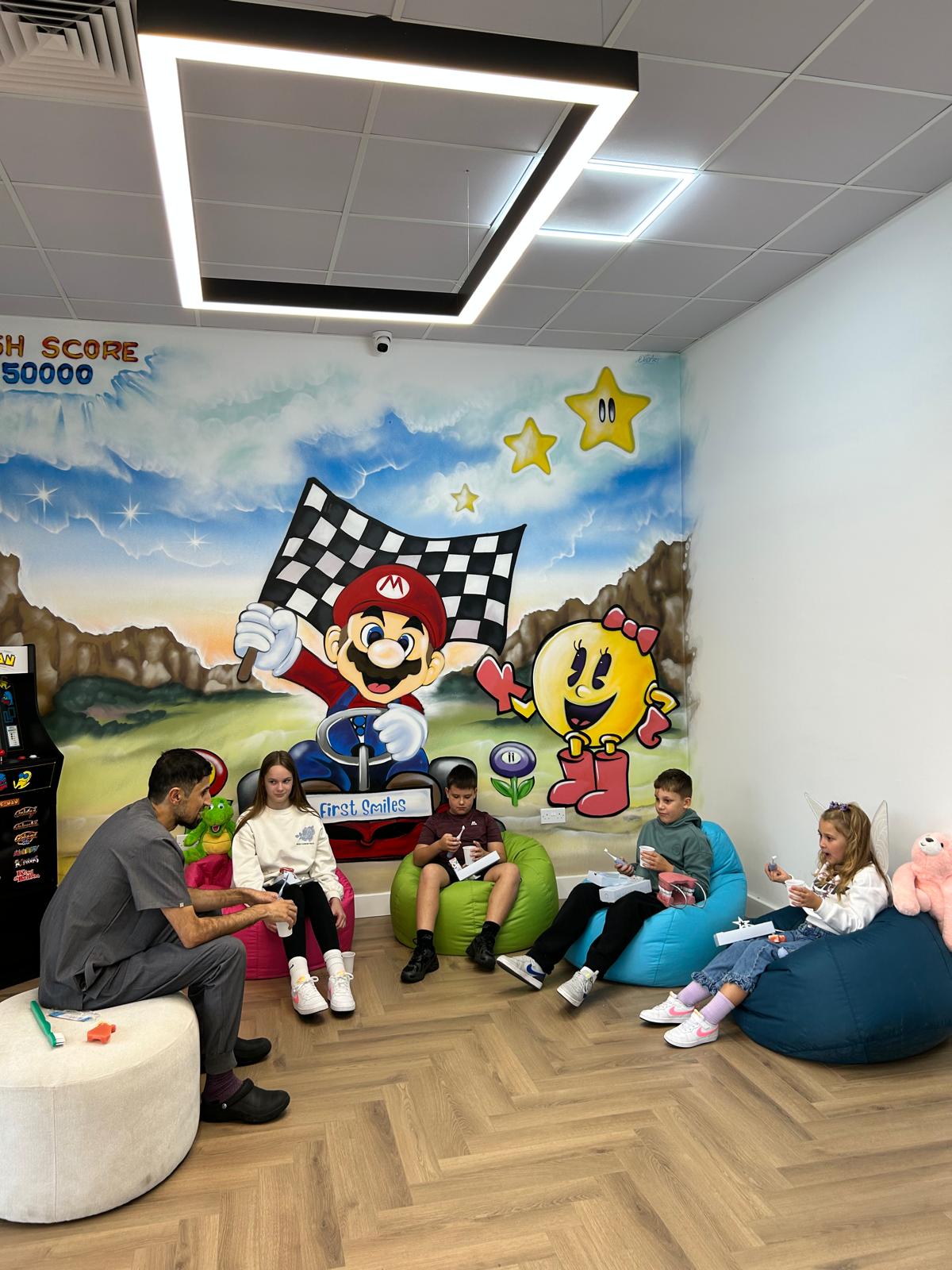
Pictures from our recent toothbrush academy day!